

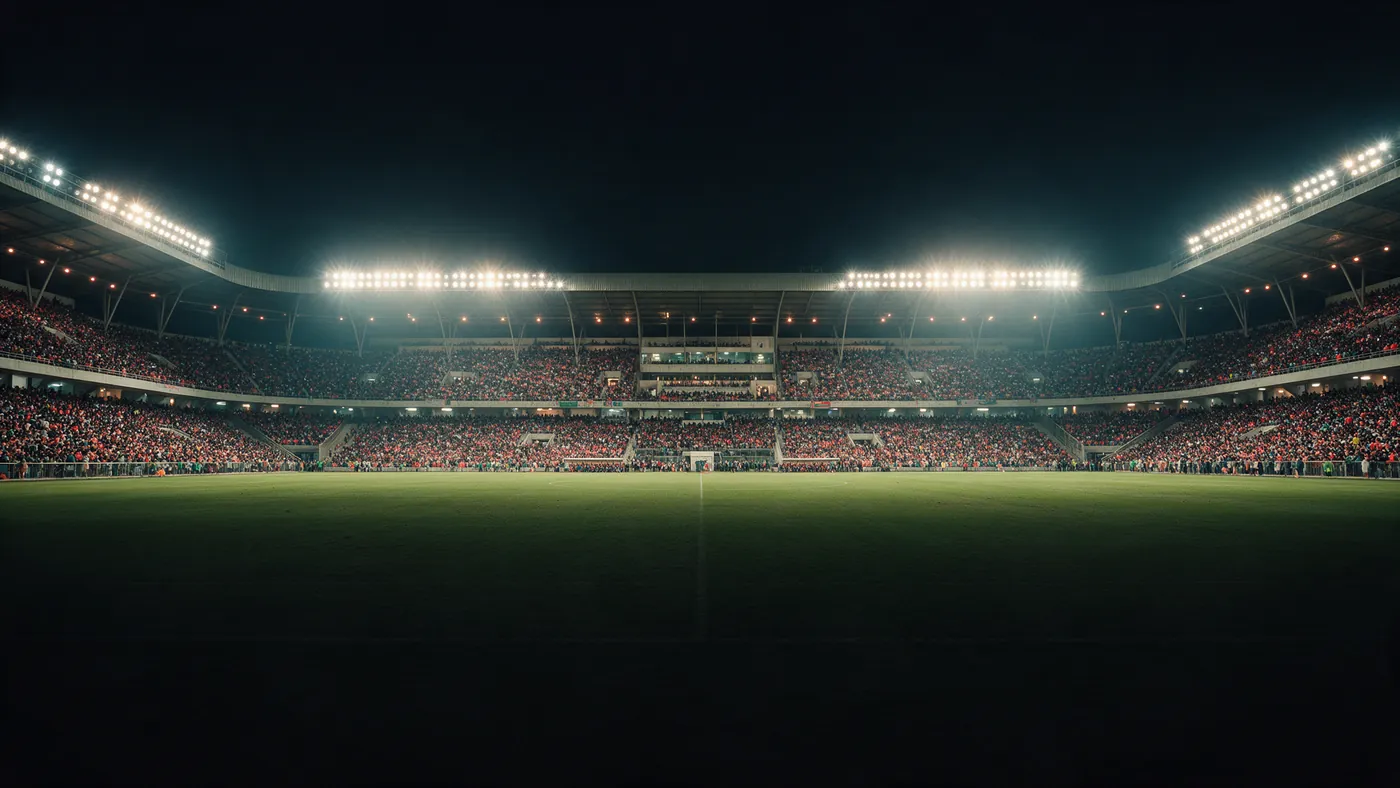
A stadium is the one venue where every weakness in a ticketing system shows up on the same evening. Capacity is large enough that a one percent oversell is a crowd safety problem rather than a refund. Arrival is compressed into roughly the last forty minutes. And the gate is the only place where software meets a queue that cannot be asked to wait. Everything on this page follows from those three facts.
What tends to go wrong
Rarely the selling. Almost always the counting and the door.
- Stands, blocks and terraces are sold off separate lists, so total capacity is a number nobody can produce on demand
- Complimentary tickets, sponsor allocations and federation quotas are handled outside the system and reappear at the turnstile
- Paper sold through outlets is counted apart from anything sold online, and the two are reconciled after the match rather than before it
- The gate slows to a crawl because every scan is a search rather than a decision
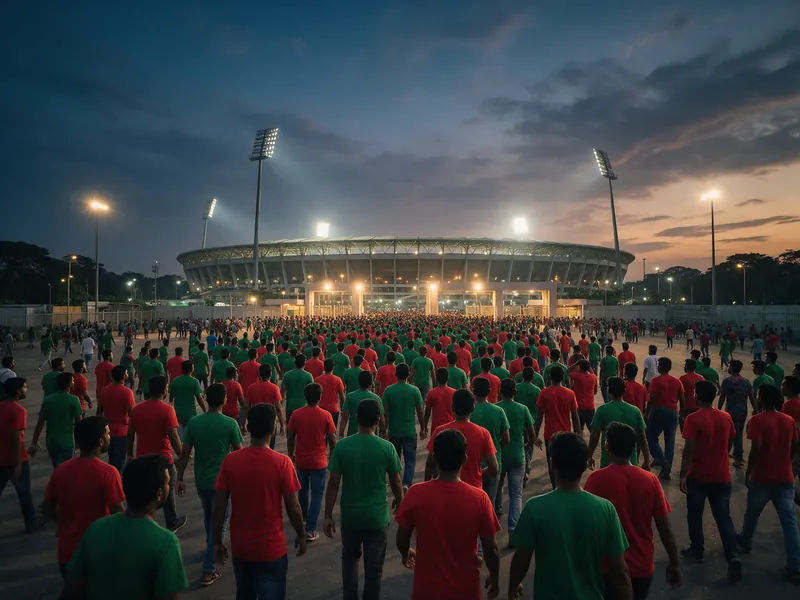
Forty minutes, a handful of entrances, and everybody arriving at the same time. That is the real design problem.
Arrival is compressed, so the gate is the system
A stadium does not fill evenly. Most of the crowd turns up inside the last forty minutes, which means throughput at the turnstile, not throughput on the website, decides whether kickoff is calm.
So a scan has to be a decision rather than a search. The code resolves the whole booking at once, a family or a group of eight enters on one code, and a code that has already been used is refused immediately with the reason on screen. Every scan is recorded against the device and the person holding it, which is what makes the count afterwards something you can stand behind.
What you get
The event ticketing engine at the scale it was built for.
- A seat map per stand or block for reserved seating, and general admission categories for open terraces, both drawn from one capacity
- Seats held while a buyer chooses and released the moment they do not, which is what stops two people buying one seat in a rush
- Allocations for sponsors, federations, clubs and away support, issued out of the same inventory rather than promised beside it
- Printed stock where you need it: numbered tickets in sequence for outlet distribution, wristbands, and accreditation passes for press, crew and medical
- Gate scanning with permissions per person and per entrance, and an audit line behind every scan
- A box office on the day selling from the same inventory as the website, with the tender recorded as it happened
Sports and tournaments
A tournament is a series of fixtures rather than one, and the thing that breaks is usually the pass rather than the ticket. A day ticket, a stage ticket and a whole-tournament pass all come off the same capacity, with the scan rule set per product: valid once, valid once per fixture, or unlimited for the run. Schedules that move, which they do, are a change to a fixture rather than a re-issue of everybody's ticket.
One capacity, or none
The rule that holds all of this together is that there is exactly one count of the ground. Online sales, outlet sales, the box office on the day, sponsor allocations and printed stock all draw from it, and a ticket printed for an outlet is gone from the online store the moment it is issued rather than the moment it is sold. That is the difference between an oversold block being impossible and being discovered at the turnstile, and it is why printed and digital are one product here rather than two processes that meet at the end of the night.
Common questions
Can you handle reserved stands and open terraces together?
Yes, and they come out of one capacity. Reserved stands get a seat map per block, terraces are sold as general admission categories with a count, and the total is one number rather than an addition somebody does by hand. A block can be switched between the two, closed, or held back for an allocation without touching anything else.
Will the gate keep up?
The scan is a decision rather than a lookup. The code resolves the whole booking at once, so a group of eight enters on one code instead of eight searches, and a code that has already been used is refused immediately with the reason shown, which is faster than a steward improvising. Scanning permissions are granted per person and per entrance, and every scan is recorded against the device that made it.
We still sell printed tickets through outlets.
Then they are issued from the same capacity as the digital ones. A numbered ticket printed for an outlet leaves inventory the day it is issued, not the day it is sold, so the online store cannot oversell what is already sitting in a drawer. The same scanner reads both, and a reprint voids the original at the moment it is printed.
What about press, crew and medical passes?
Printed against a named list, with the access zones on the face of the card so a steward can read it at arm's length in the dark. They scan like any other credential, and who is allowed where is a permission rather than a colour somebody has to remember.
Do you do season tickets and memberships?
Yes. A season ticket is a pass rather than an appointment, and you decide how its code behaves: valid once per fixture, a fixed number of times, or unlimited for the life of the pass. Holders can be carried as a segment, so a presale or an allocation can be opened to them ahead of general sale.
Other industries we work with

Events and concerts
Reserved seating and general admission on one inventory, on your own domain.
Read more
Tours and guided experiences
Departures, seats per departure, and a direct channel beside the listing.
Read more
Adventure activities
Places per departure, group minimums, and a cancellation policy that survives weather.
Read moreTell us about the event
Send your capacity by stand, what goes to sponsors and federations, and how many entrances you have. We will build the ground, lay out the stands and walk you through the gate flow before anything is agreed.
Prefer email? support@quicket.me