

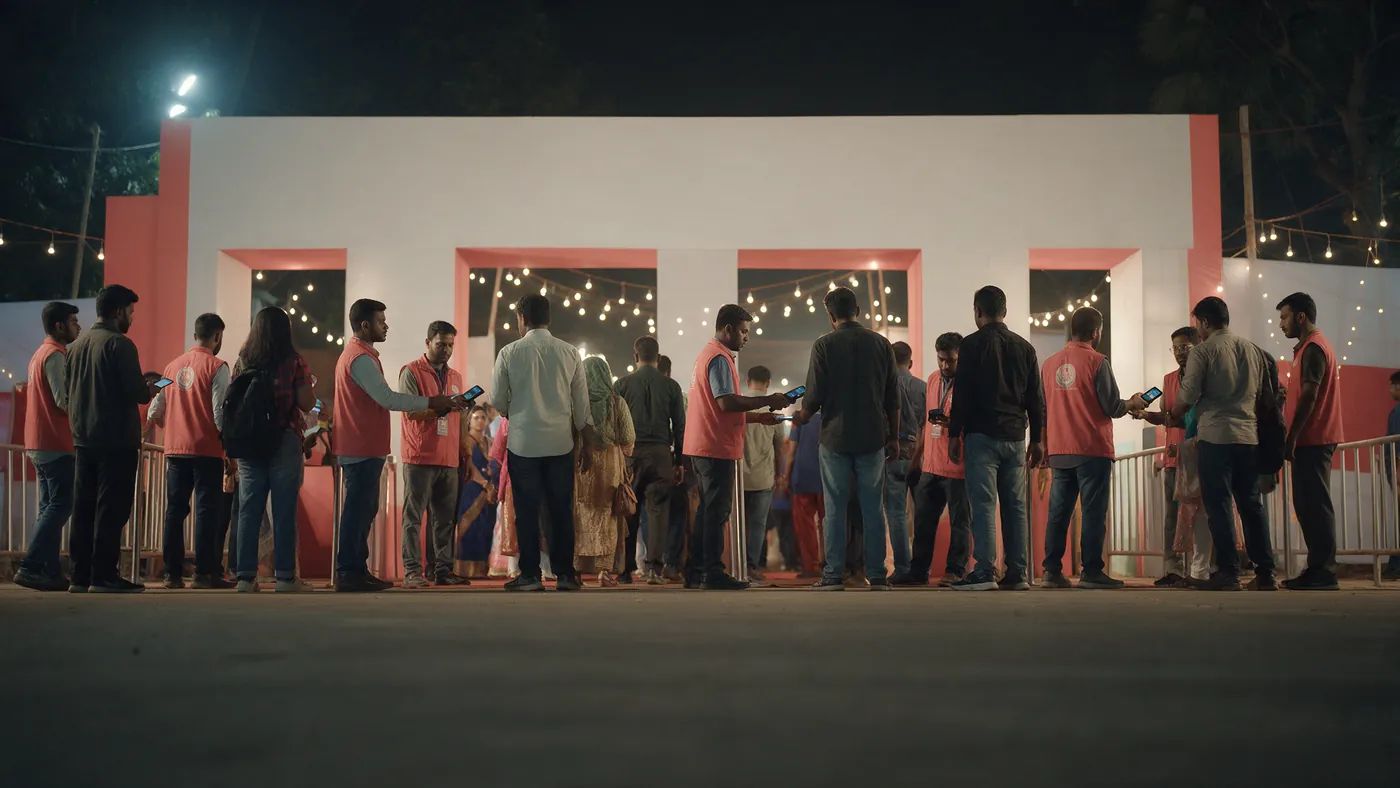
On the day, software stops being a dashboard and becomes four people standing at doors. What matters then is narrow: does the code scan, does the person on the counter have a way to sell to the queue in front of them, and can the bar charge something to a guest without inventing a parallel system that has to be reconciled at midnight. All three run off the same booking here, which is the only reason the numbers agree the next morning.
The four desks
Each of these is a screen somebody stands at, not a report somebody reads later.
The gate
One code per booking, whatever is on it. Scanning it resolves the whole booking (every night, every extra, everyone on it) so a family of five is one scan rather than five searches. Whether a code works once, a set number of times, or all day is decided per thing, so a day pass and a single tour do not need different hardware.
The counter
Walk-ups sold on the spot become real bookings: a place actually leaves inventory, a code is issued, a confirmation goes out, and the sale lands in the same reports as an online one. How it was paid (cash, a card machine, a transfer) is recorded as it happened rather than guessed at.
The tab
Anything charged on site attaches to the booking instead of to a receipt: drinks, the spa, a ride, a deposit on a key. Every line carries who charged it and which vendor it belongs to, and it is keyed so a double-tap at a busy bar records one charge rather than two.
Settlement
Because every charge names its vendor, what each concession is owed for a range of dates comes out of the ledger with the individual lines behind it, and exports. That makes it a report rather than a negotiation.
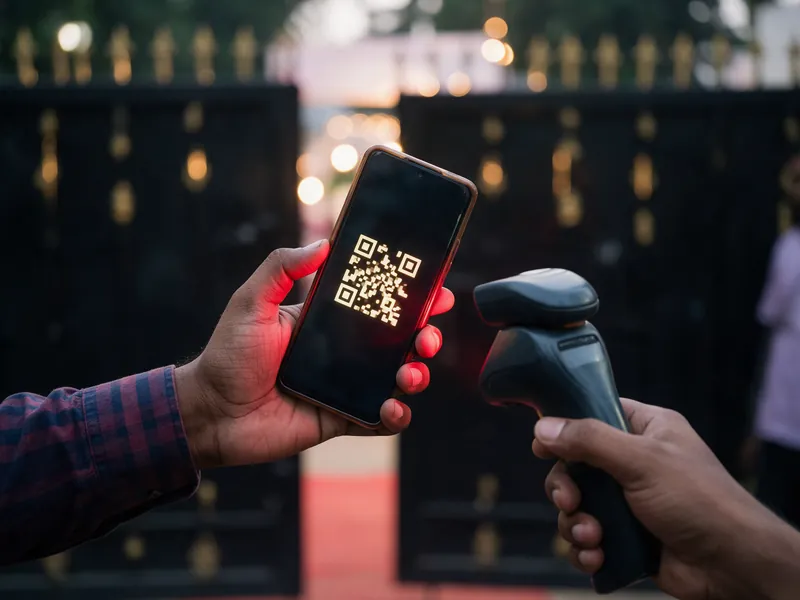
One code, presented at a gate in the dark, by somebody who has had a long day.
A code that behaves the same in the worst thirty seconds
A gate is judged on how it behaves in the worst thirty seconds of the evening: a queue building, poor signal, and a code that somebody else has already shown. So the rules are simple and stated up front rather than discovered at the door.
A code is good for exactly what it says (once, a set number of times, or unlimited for as long as the pass lasts) and a second presentation tells the person on the gate plainly which of those it was. Every scan is written down: which device, which person, which moment, accepted or refused. That is what makes a dispute answerable afterwards instead of a question of whose word it is.
The day, in the order it happens
The screen the shift actually runs on.
- Who is due, grouped by start time rather than by when they booked
- Party size, and whatever they were asked at booking: allergies, pick-ups, levels
- Who has arrived and who has not, updating as the gate scans them
- Check a whole party in at once, because that is how they arrived
Who was allowed to do that
Scanning is a permission, granted per person and per thing, so the volunteer on the side gate is not the manager who can check a party in without a code. Every action leaves a line behind it: the scan, the counter sale, the charge on a tab, the refund, the change to a booking. The point is not surveillance. It is that on Monday morning, "we think about forty came in through the side entrance" is replaced by a number, and whoever has to answer for it can see how that number got there.
Common questions
Does every ticket have its own code?
One code per booking, not one per line on it. Scanning it resolves everything on that booking (all the nights, all the extras, everyone on it) so a family with a room, a spa slot and two pool days is one scan at each point rather than a search each time. Individual passes inside a booking can still be scanned on their own where that is what you want.
Can guests come and go?
That is set per thing. A code can be good for one entry, a fixed number of entries, or unlimited scans for as long as the pass lasts, which is how a day pass, a season pass and a one-off tour all run on the same scanner. A single-use code presented twice is refused, and the person on the gate is told why.
Who is allowed to scan?
Whoever you grant it to, per person and per experience, so a casual helper on one gate does not get access to everything. Every scan records the device, the person and the moment, accepted or refused, which is what makes a dispute answerable later.
Can we sell at the door?
Yes, and it produces a real booking: inventory actually moves, a code is issued, a confirmation is sent, and it shows up in the same reports as an online sale. The tender is recorded as it happened (cash, card machine, transfer) rather than everything being lumped together as counter takings.
How do we settle with concessions?
Every charge on a guest's tab names the vendor it belongs to, so takings per vendor for any range of dates come straight out of the ledger with the individual lines behind them, and export as a CSV. The money is still collected on site; what this replaces is the reconciliation, not the till.
The rest of what we do
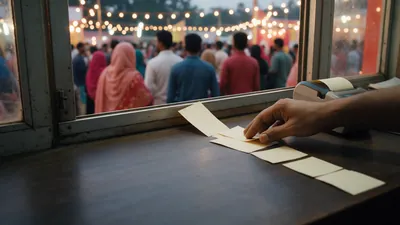
Box office
Quicket POS at the counter: walk-up sales from the same inventory as your web store, with printed tickets.
Read more Coming soon
Quicket Studio
The organizer app for your phone: build events, run the door and follow the sales.
Read more
AI and agents
An assistant inside the dashboard, and an endpoint your own agent can drive.
Read moreTell us about the event
Tell us how many doors you have, who is standing at them, and whether anything gets charged on site. That is usually enough for us to set the permissions up and hand you a scanner to try.
Prefer email? support@quicket.me