

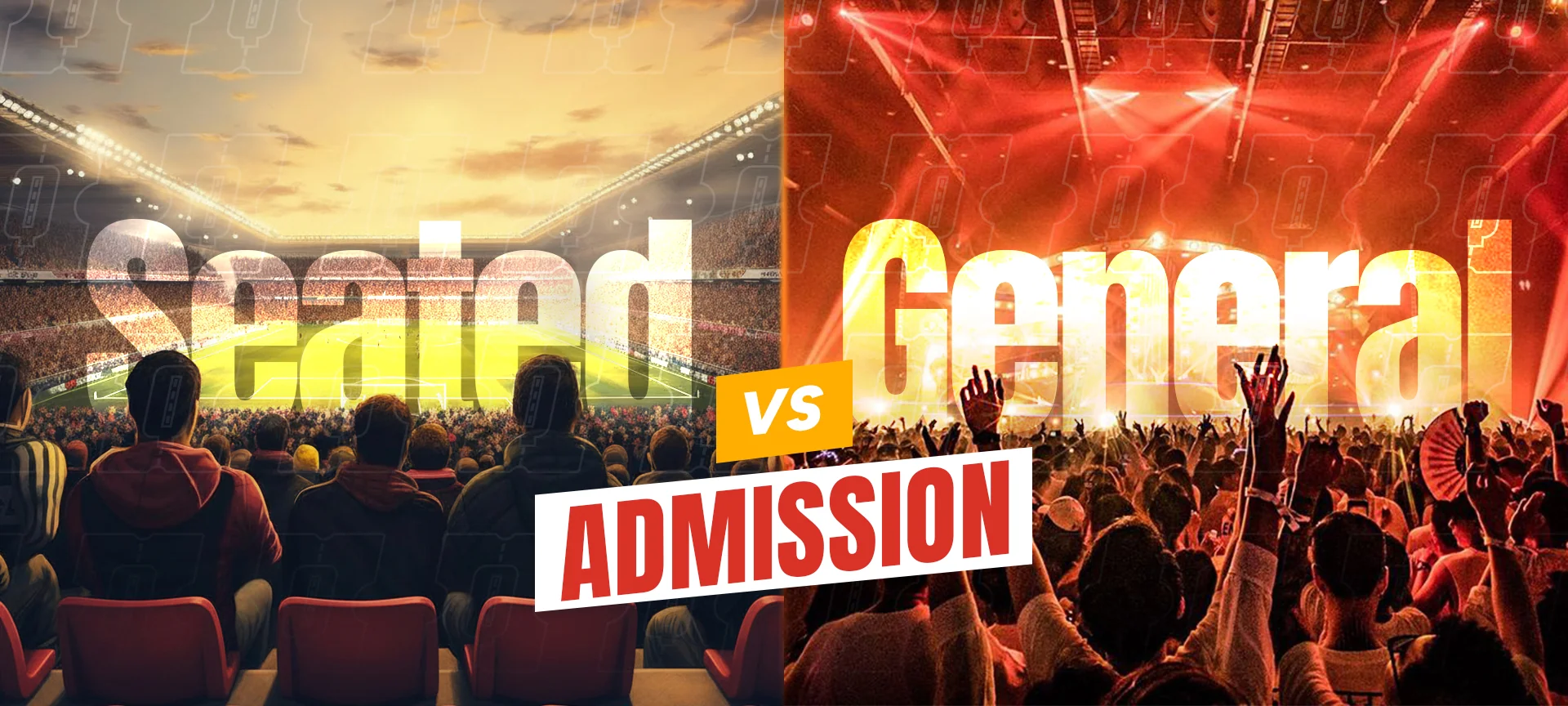
Seated vs. General Admission
Deciding between seated vs general admission? Learn how to choose the right ticketing model to maximise revenue and improve entry flow for your next event.
Seated vs. General Admission: Which Ticketing Model Is Right for Your Event?
Choosing between seated and general admission (GA) ticketing is a strategic decision that impacts your pricing, revenue per attendee, and entry operations. This guide evaluates the trade-offs with practical examples for event organizers in South Asia and Southeast Asia.
The Two Models Defined
General Admission (GA)
Every ticket provides the same level of access. Attendees choose their own spot on a first-come, first-served basis. Organizers set a capacity limit and sell up to that number. This model is simple to configure, ensures fast check-in, and remains flexible if venue layouts change. Most festivals, networking events, and club nights use GA by default.
Reserved or Seated Ticketing
Each ticket corresponds to a specific seat chosen by the buyer during checkout. The venue is typically divided into zones with tiered pricing, where attendees pay a premium for better views. This is the standard for theatres, stadium sports, and high-end concerts where the experience varies significantly based on location.
Does Location Change the Experience?
Before comparing logistics, ask: does where an attendee sits materially change their experience?
If the answer is yes, you should use seated ticketing. For example, the front row of a theatre or pitch-side seats at a cricket match offer vastly different value than the back row. Failing to tier these seats means leaving revenue on the table and risks conflict at the door as people scramble for the best spots.
If the answer is no, general admission is the better choice. For food festivals, mixers, or DJ sets where the crowd is expected to move, forcing a seating plan creates unnecessary friction and slows down entry for no tangible benefit.
When General Admission Wins
Outdoor Festivals: Events with multiple stages and wandering crowds are unmanageable with reserved seating.
Club Nights: The dance floor is the main attraction. Assigning seats to a standing crowd adds cost without value.
Networking Mixers: Movement is the goal. Reserved seating actively discourages interaction.
Free Community Events: The overhead of building a seat map is rarely worth it for small meetups or free workshops.
When Seated Ticketing Wins
Performing Arts: Sight lines and acoustics matter. Seated ticketing prevents a scramble at the door and allows for proper price tiering.
Stadium Sports: The difference between ringside and the upper tier is significant. In markets like Bangladesh and Thailand, fans have clear expectations about paying for specific views.
High-Price Events: When tickets exceed 5,000 taka or 2,500 baht, buyers expect to know exactly where they will be positioned before they pay.
Fine Dining: Supper clubs and tasting events benefit from assigned tables to manage service and guest placement.
Maximizing Revenue with Tiered Pricing
General admission often leaves money on the table. Consider a 1,000-seat auditorium. Sold as GA at a flat 1,500 taka, you earn 1.5 million taka. However, by using seated tiers (VIP at 3,000, Gold at 1,800, and Balcony at 800), you can capture both the high-end willingness to pay and the price-sensitive segment. This often results in 20 to 30 percent more revenue from the same number of attendees.
Modern Solutions for Local Organizers
In the past, seated ticketing was difficult in South Asia due to complex software requirements. Quicket has removed these barriers. Organizers in Bangladesh and Thailand can now build custom seat maps in under an hour, accept local payments like bKash, Nagad, and PromptPay, and manage check-ins via a standard smartphone app.
Hybrid Models: The Best of Both Worlds
Many events require a mix. A concert might feature a seated balcony for VIPs and a standing pit for GA. Quicket handles this by treating seated and GA sections as separate tiers within the same event. At the door, the scanner instantly tells staff whether to direct the guest to a specific seat or the general area.
Event Planning Decision Checklist
Fixed Seating: If the venue has permanent seats, use them.
Experience Variance: If some spots are much better than others, use seated ticketing.
Movement: If attendees will be mobile, choose GA.
Price Point: For premium tickets, buyers expect reserved seating.
Complexity: GA is faster to set up; seated ticketing requires more planning but offers higher returns.
Ready to launch your event? Visit quicket.me/host to start. Whether you choose GA or a complex seat map, our platform provides the tools to manage your audience and grow your revenue.